 EN
EN PT
PTArte do capítulo 10
Aqui está uma lista de todas as obras de arte citadas no capítulo. Elas são exibidas em cores na sequência em que aparecem no livro para aqueles com cópias Kindle que desejam ouvir o livro em Kindle e ver as figuras aqui.
Silence
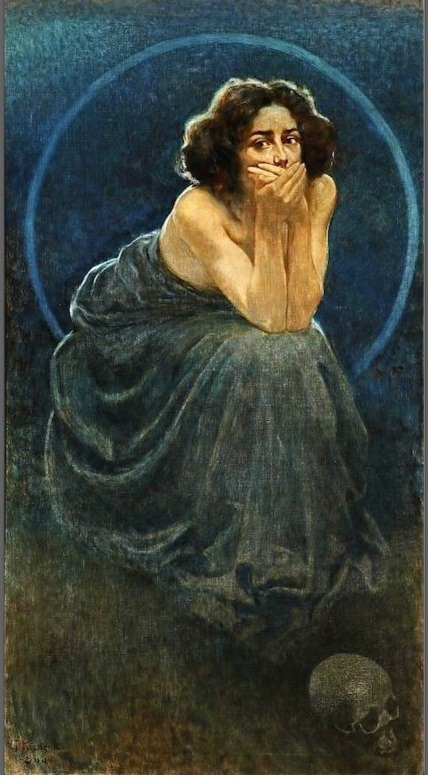
Artist: Giorgio Kienerk
Source; License: Source: Wikipedia License: Public Domain.
Chapter: 10 The No-God, Not-Thinks No-Thoughts about the No-Thing
Description: Silence, by Giorgio Kienerk. A symbol for Chapter 10, Part 1: Transcendence Itself, the No-God, the No-Mind.
Book Excerpt
In this chapter I prefer to describe these deities as functions rather than as an aspect of our personality. Our identification with the deities from Chapter 9 fades or melts into us, and our identification with ourselves fades too like the dress in the artwork called “Silence”, which disappears into the empty background. This painting, “Silence”, becomes the symbol for this chapter.
Pain, Silence and Pleasure, The Human Enigma
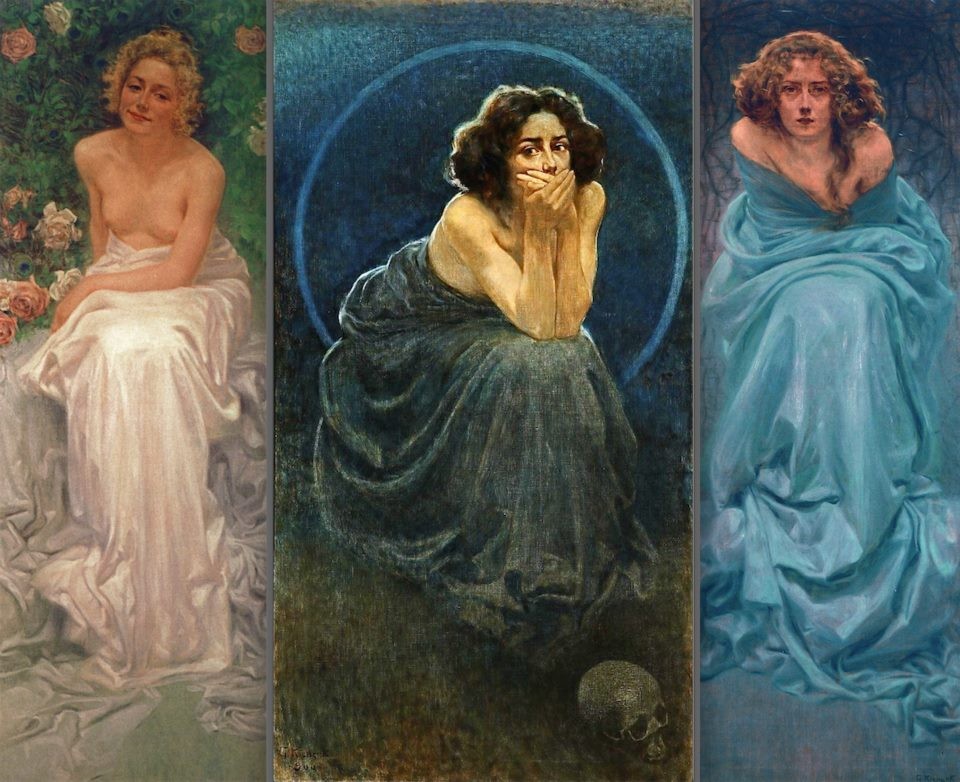
Artist: Giorgio Kienerk
Source; License: Source: Wikipedia License: Public Domain.
Chapter: 10 The No-God, Not-Thinks No-Thoughts about the No-Thing
Description: Pain, Silence and Pleasure, the Human Enigma by Giorgio Kienerk.
Book Excerpt
Some of us may be drawn to the idea of transcendence described in Chapter 10, yet still feel stuck in earlier stages of consciousness. How do we move forward? Chapter 11 explores this question by guiding us through a museum-like journey that illustrates the path toward transcendence—reaching a state of awareness with little or no attachment to identity. Along the way, we’ll examine a triptych painting and a range of ancient artworks from diverse cultures.
The Book Of Mirrors
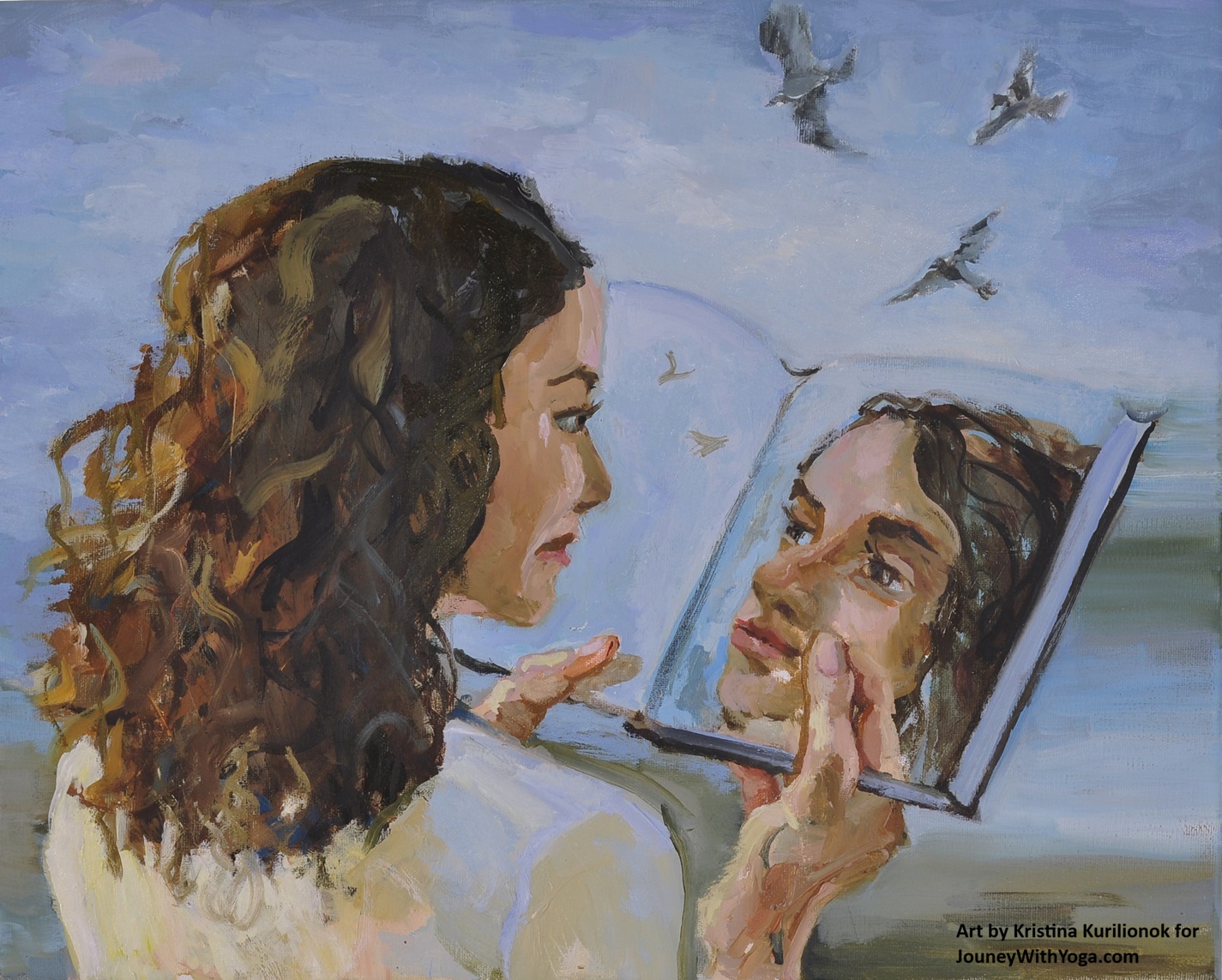
Artist: Kristina Kurilionok
Source; License: Ilustração comissionada para o livro. Permissão para partilha concedida, desde que os devidos créditos ao artista e ao livro sejam apresentados claramente abaixo da imagem.
Chapter: 10 The No-God, Not-Thinks No-Thoughts about the No-Thing
Description: A woman reads into a book whose pages are made of mirrors reflecting her face and the blue sky behind her.
Book Excerpt
A metaphor presented on the last scenes of the Zen movie: "The Circle of Iron".
After this Unlearning or Learning Adjustment, one may Return Home with new Eyes

Artist: AI Generated for this edition at least.
Source; License: Source: Gemini. Copyright: André Cesta.
Chapter: 10 The No-God, Not-Thinks No-Thoughts about the No-Thing
Description:
Book Excerpt
After this unlearning or learning adjustment, one may return home with new eyes. Like a prodigal son perhaps (but do not identify with that). This chapter is about such a return home.
A Teacher Invites the Students for Tea

Artist: AI Generated for this edition at least.
Source; License: Source: Gemini. Copyright: André Cesta.
Chapter: 10 The No-God, Not-Thinks No-Thoughts about the No-Thing
Description: A group of students is feeling very stressed on the eve before their exams. Seeing the stress, their teacher invites them for tea in her modest teacher’s house.
Book Excerpt
The cups were all different because she did not have enough cups for all students, and could not afford better with her teacher’s salary. Some cups were fancy, made from crystal, some were cheap, made from crackled and stained porcelain, some had cool painted motifs.
The students started rushing and elbowing each other to get to the best cups first. Seeing the monkey ordeal, the teacher disapproved them by saying: ...
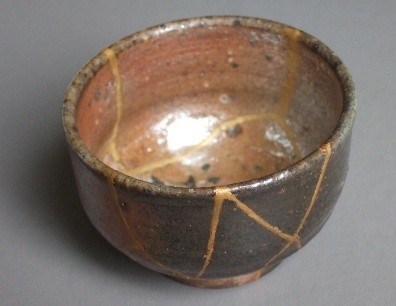
Kintsugi, Gold Joinery Repair from Japan
Artist: Haragayato.
Source; License: Source: Wikipedia: https://en.wikipedia.org/wiki/File:Kintugi.jpg. License: ASAG 4.0.
Chapter: 10 The No-God, Not-Thinks No-Thoughts about the No-Thing
Description: The Japanese use gold to repair old cups to preserve their valuable object history. They are seen as better than a brand-new shining cup.
Book Excerpt
If you like this story, and its perfect-imperfection taste; and if you have time to enjoy your journey; I recommend you grab a cup of tea and research about “wabi-sabi” and its objects with imperfections. Research also the beauty of kintsugi repaired objects, such as broken porcelain repaired with gold joinery. The Japanese use gold to repair old cups to preserve their valuable object history. They are seen as better than a brand-new shining cup.