 EN
EN PT
PTArtwork from Chapter 8
Aqui está uma lista de todas as obras de arte citadas no capítulo. Elas são exibidas em cores na sequência em que aparecem no livro para aqueles com cópias Kindle que desejam ouvir o livro em Kindle e ver as figuras aqui.
Vishnu Mandala, Yantra

Artist: Unknown.
Source; License: Source: Wikipedia. License: Public Domain.
Chapter: 7 Yoga and Psychology
Description: Details: Made in: Nepal from the Nasli and Alice Heeramaneck Collection, Museum Associates Purchase. December 1419.
Book Excerpt
C.G. Jung was fascinated by mandalas in his study of psychology and yoga. Above a Vishnu Mandala or Yantra. The god of preservation (Vishnu in white) is presented sided by what are most likely the gods of destruction (dark blue) and creation (dark pink, red).
Light and Shadow
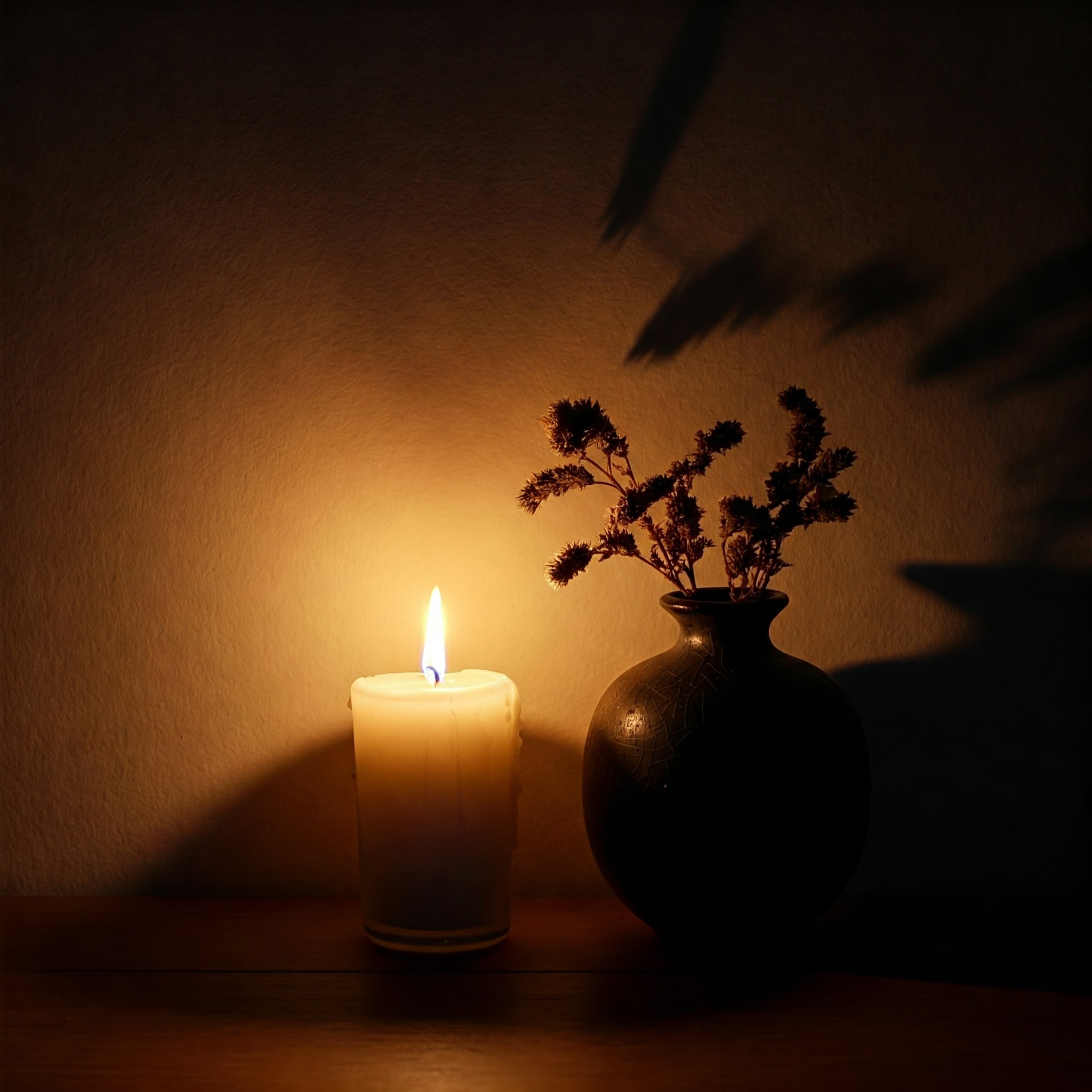
Artist: AI Generated for this edition at least.
Source; License: Source: Gemini. Copyright: André Cesta.
Chapter: 7 Yoga and Psychology
Description: Jung described the shadow as consisting of whatever we reject as “not I”**, which means that concept or experience is not dealt with, whether incorporated in a healthy way, or let go off.
Book Excerpt
The shadow sits in between our light and the reality we want to see. It sits in between because we cannot use it to make our light stronger or let go of it so it does not stand in the way of our light.
Wanderer Above The Sea of Fog

Artist: Caspar David Friedricht.
Source; License: Source: Wikipedia. License: Public Domain.
Chapter: 7 Yoga and Psychology
Description: What is special is that the heart is at the centre of the painting and even the mountains form a line crossing the wanderer’s heart. Compassion. “It is only with the heart that one can see rightly; what is essential is invisible to the eyes” – Exupéry.
Book Excerpt
What else is special? He is relaxed, his spine makes an ‘S’ shape, what in Italian painting is called a: ‘contrapposto’. This is the body language opposite of a manipulator erect expansive stance (such as standing hard and straight with both elbows sticking out)...
The Clash of Opposites, Where Fire Meets Water, and Earth Meets Air
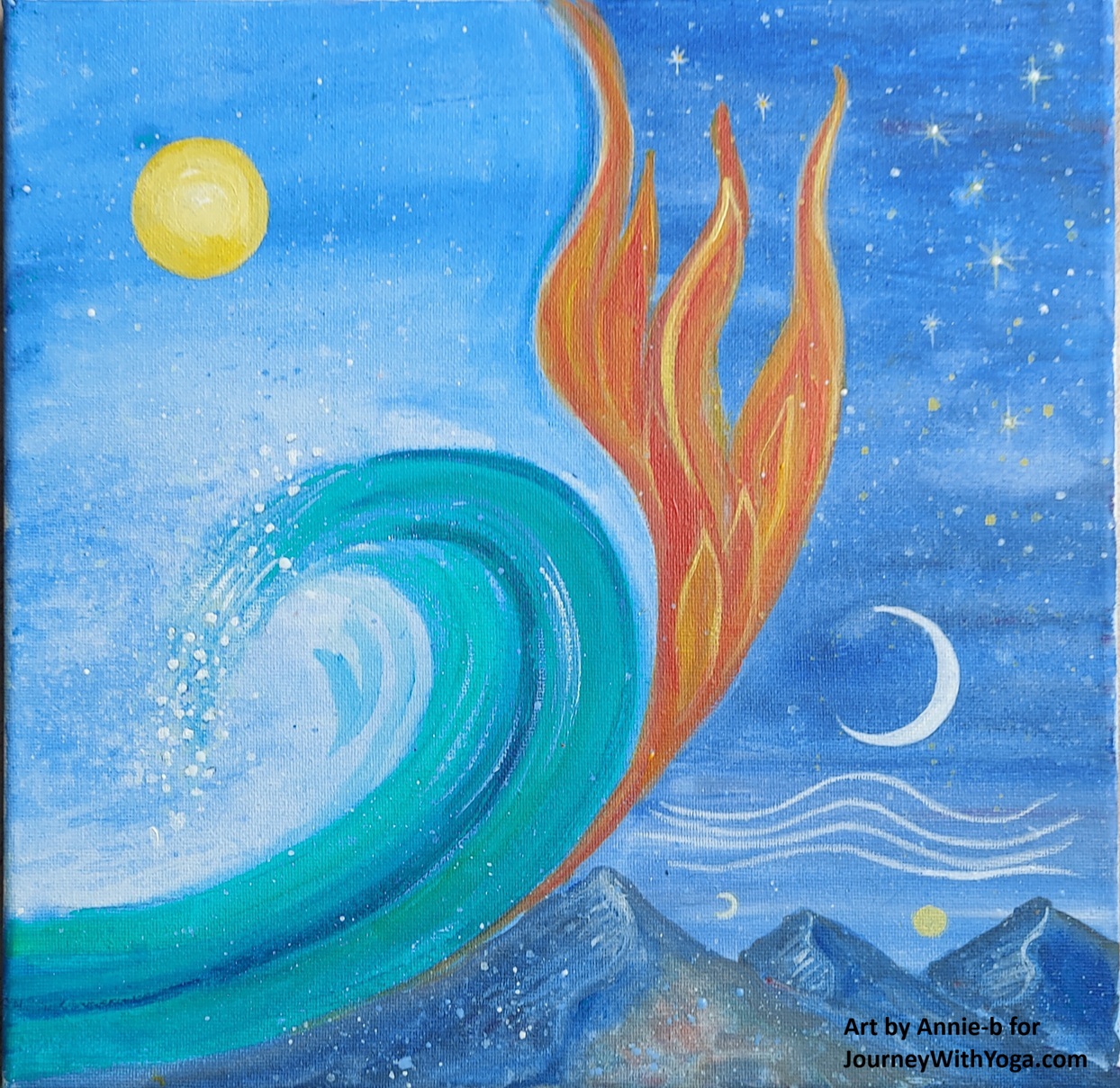
Artist: Annie-b.
Source; License: Illustration commissioned for the book. Feel free to share these low-resolution images on social media and web platforms provided mention to the artist and the book are clearly made below the image! Please note that all rights are reserved, and reproduction for prints or commercial use is strictly prohibited.
Chapter: 7 Yoga and Psychology
Description: On light and shadow: It is through one (say, shadow) that we come to know about and reach the other (say, light). It is through shadow that we learn to know what is light and reach it, and vice versa. “What would be of the light if there would be no shadow, and vice versa?” – Dr. Celso Charuri. It is only though contrast that we see.
Book Excerpt
If there would only be darkness, then one sees nothing, no differences, not even the darkness. Similarly, if there would be only light, one is blinded by the clearness.
Are you Egg, Carrot or Coffee?

Artist: AI Generated for this edition at least.
Source; License: Source: Gemini. Copyright: André Cesta.
Chapter: 7 Psychology and Yoga
Description: ... when you cook a carrot; an egg or coffee bean, it is like putting them through a crisis. During a crisis some may soften like a carrot; some may harden like an egg, even their heart hardens. While others – like the coffee bean – will bring out their best aroma ...
Book Excerpt
I quote a story that complements this idea of using moments of crisis to let go of the past and bring the best in you. This story is about a girl went to her father in despair, seeking advice about a broken heart. Her father who was a restaurant chef said he did not know much about these things of the heart. But he wanted to tell something he learned from cooking that could help. The father asked the girl: “are you a carrot; and egg or a coffee bean”? The girl perplexed said she didn’t know. The father explained that when you cook a carrot; an egg or coffee bean, it is like putting them through a crisis. During a crisis some may soften like a carrot; some may harden like an egg, even their heart hardens. While others – like the coffee bean – will bring out their best aroma when subject to stress/heat.