 EN
EN PT
PTArte do capítulo 12
Aqui está uma lista de todas as obras de arte citadas no capítulo. Elas são exibidas em cores na sequência em que aparecem no livro para aqueles com cópias Kindle que desejam ouvir o livro em Kindle e ver as figuras aqui.
Mind marketing

Artist: AI Generated for this edition at least.
Source; License: Source: Gemini. Copyright: André Cesta.
Chapter: Chapter 12: An Abstract and Symbolic Look at Transcendence and the Subtle Energy Body.
Description: A great confusion in ordinary minds is that pleasure is good and pain is bad. Our society, and its marketing media, seem to be trying to teach everybody that pleasure is good and pain is bad, and that happiness comes from pleasure. Every marketing poster and TV commercial tries to associate the product being sold with symbols of pleasure.
Book Excerpt
Not all pain is bad. Although the aspirin manufacturers would love us to believe it so, not all pains are bad and must be eliminated. I do not even take aspirin if I have a headache.
A Hyper-Plus
Artist: AI Generated for this edition at least.
Source; License: Source: Gemini. Copyright: André Cesta.
Chapter: Chapter 12: An Abstract and Symbolic Look at Transcendence and the Subtle Energy Body.
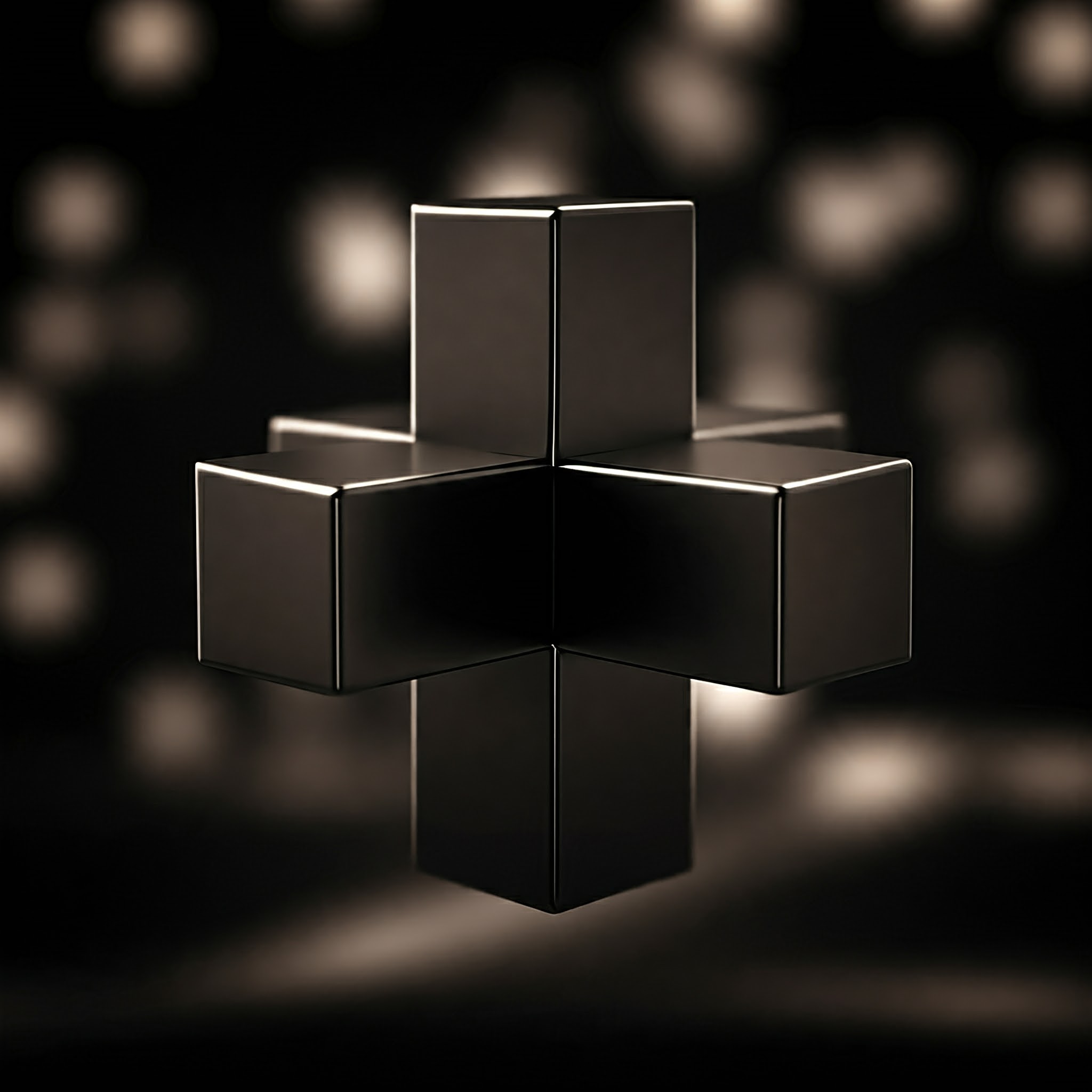
Description: A 3d rendition of our framework based on the Katha Upanishad.
Book Excerpt
I ask you to get a pencil and write on the book margins next to the image or use a sticky note. Imagine one of the horizontal axes representing duality such as pleasant or unpleasant. Imagine the second horizontal axis representing our colouring, or judgement of duality, such as in good or bad. The four quadrants around these horizontal axes are in the relative plane, they have been shown above in a table with examples: (1). good and pleasant; (2). good and unpleasant; (3). bad and pleasant; (4). bad and unpleasant.
Now let us describe the vertical axis going from hell below to heaven above. Excuse the dramatic words; you should see heaven and hell as mind states right here and right now. Let us do our journey on the vertical axis...
Yin and Yang
Artist: Stefan Lucas Allen.
Source; License: Artwork commissioned for the book.
Chapter: Chapter 12: An Abstract and Symbolic Look at Transcendence and the Subtle Energy Body.
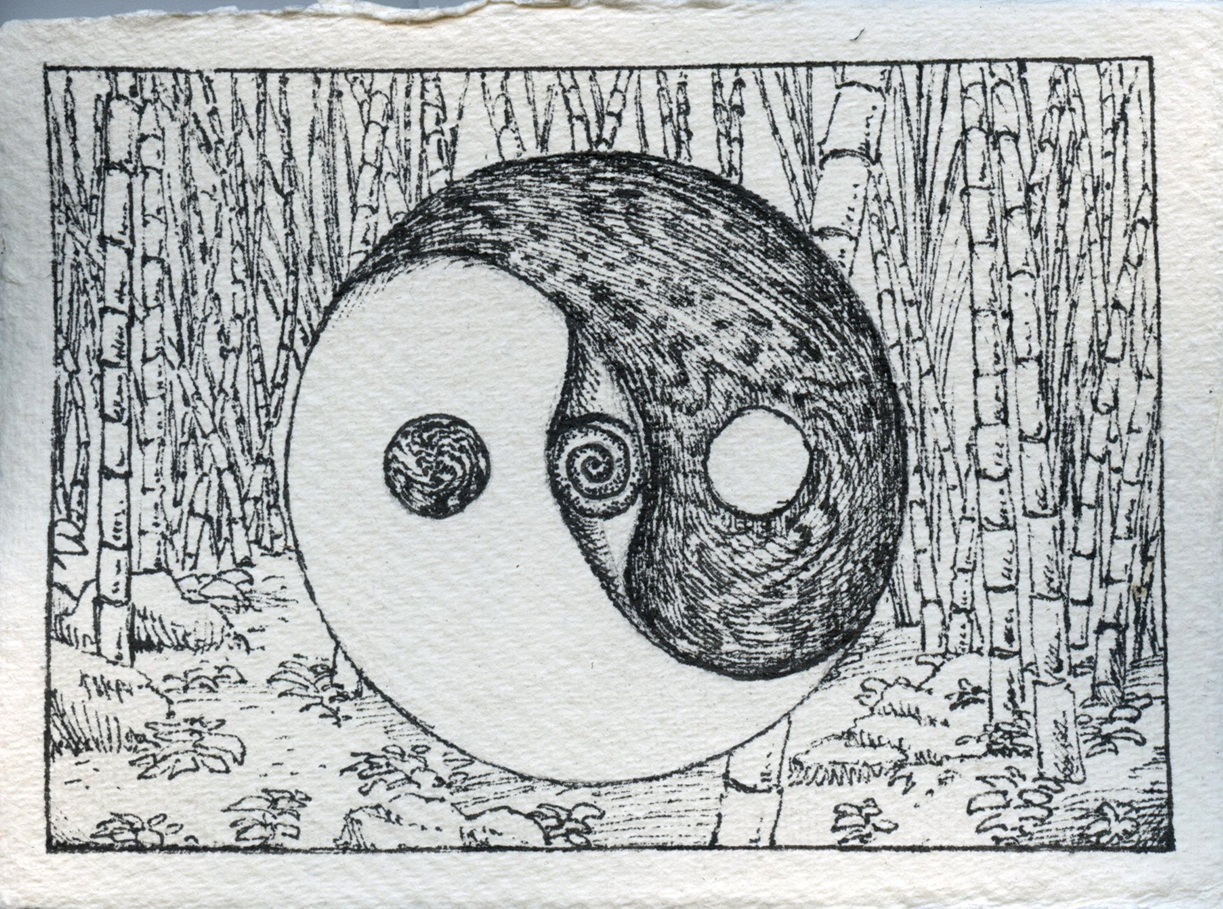
Description: C. G. Jung was also fond of the archetype of “angels in hell and demons in heaven”. In the Taoist symbol for Yin and Yang we have the same, a little bit of white in black, a little bit of black in white.
Book Excerpt
Realising the nature of this whole symbol is the transcendence thereof (into a geometrical dimension that is not in the plane of the picture below) or is the entirety of the symbol and not just each part..
Pyramid
Artist: AI Generated for this edition at least.
Source; License: Source: Gemini. Copyright: André Cesta.
Chapter: Chapter 12: An Abstract and Symbolic Look at Transcendence and the Subtle Energy Body.
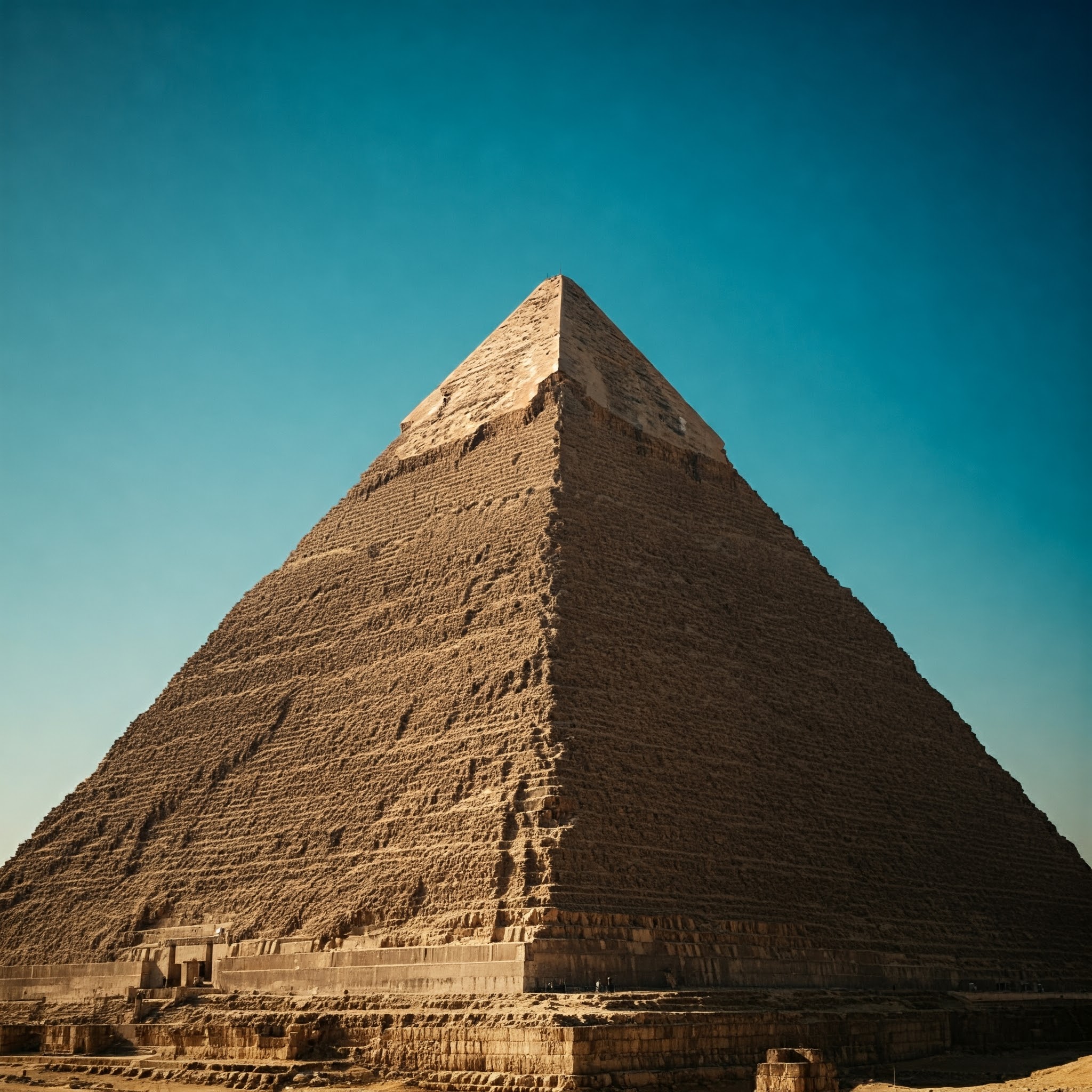
Description: If you want an alternative geometrical representation of transcendence, you can imagine a pyramid.
Book Excerpt
If you want an alternative geometrical representation of transcendence, you can imagine a pyramid with the relatives (good, bad, pleasant, unpleasant) and their four combinations (1). good+pleasant; (2). good+unpleasant; (3). bad+pleasant; (4). bad+unpleasant at the four corners of the pyramid base. And with the absolute and transcendent at the top or towards the top.
Isis Nursing Horus Child
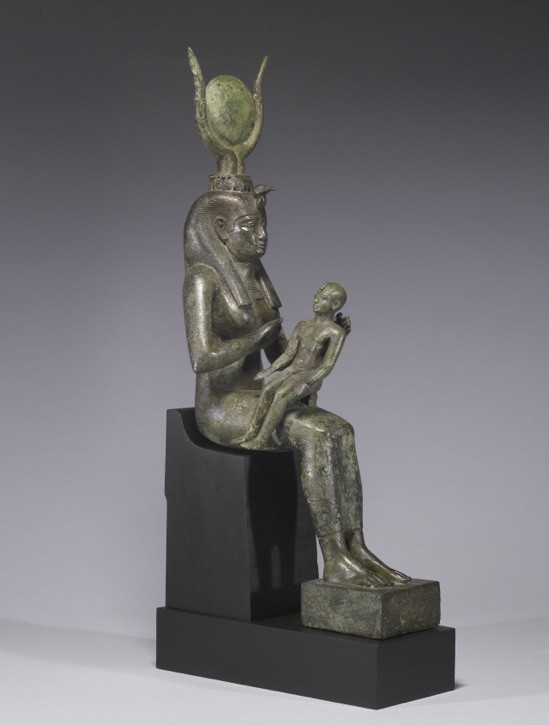
Artist: Unknown, 7th century BC. Similar depictions with the sun disk on the crown chakra go as far back as 13th century BC.
Source; License: Source: Wikipedia. License: Public Domain.
Chapter: Chapter 12: An Abstract and Symbolic Look at Transcendence and the Subtle Energy Body.
Description: Notice the sun disk on top of Isis head at the crown chakra position; and the two cow horns holding it; symbolizing two becoming one; a mother nursing a child also means two become one as we will see later in Christ’s comment on nursing from the Gospel of Thomas. Compare that to the crown of the proto-Shiva on the Pashupati seal with a similar two becomes one in the head adornment of horns. Compare the shape to the lyre from our Mosaic at Edessa. I am saying that the Egyptians, and Greek, some centuries after Pashupati and the Vedas, were also busy with chakras, in specific the head ones. Isis was the goddess for the heavens. The music from Orpheus lyre pacified all.
Book Excerpt
See Isis-Thermouthis sculptures for a serpent body symbolizing the kundalini energy that rises to the crown chakra symbolized by the moon disk above. The later is similar to what is depicted on status of Patanjali such as Patanjali in Melakkadambur or in the previous serpents from the Orpheus theogony.
The Kundalini Energy System

Artist: Pierjasi.
Source; License: Source: Wikipedia: https://nl.wikipedia.org/wiki/Kundalini#/media/Bestand:KoendalinieKanalenCentra.jpg. License: CC3.0.
Chapter: Chapter 12: An Abstract and Symbolic Look at Transcendence and the Subtle Energy Body.
Description: And now finally the yogi depiction of the kundalini energy system with the two energy channels crisscrossing around the spine positions of the seven chakras.
Book Excerpt
Other similar representations of the chakras energy system could be these artworks, mostly 18th century artworks on chakras on the Wikipedia page: https://en.wikipedia.org/wiki/Chakra . Additionally, you could look at the less cluttered artwork...
Crown, Brow, Throat Chakras
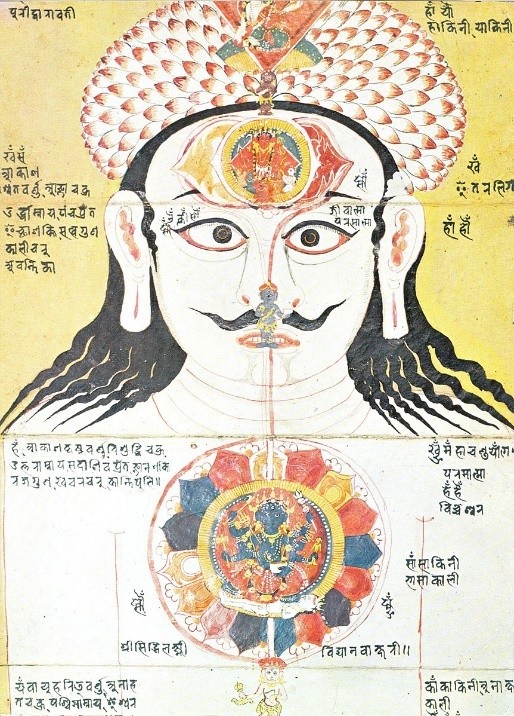
Artist: Unknown, Nepal 17th century.
Source; License: Source: Wikipedia. License: Public Domain.
Chapter: Chapter 12: An Abstract and Symbolic Look at Transcendence and the Subtle Energy Body.
Description: Regarding the heart chakra.
Book Excerpt
Regarding the heart chakra, I had a remarkable event where a friend and I sat with me on a bench under a tree with a beehive on it. That is the tree next to the stupa at Yeunten Ling. They removed the sitting bench in 2025.
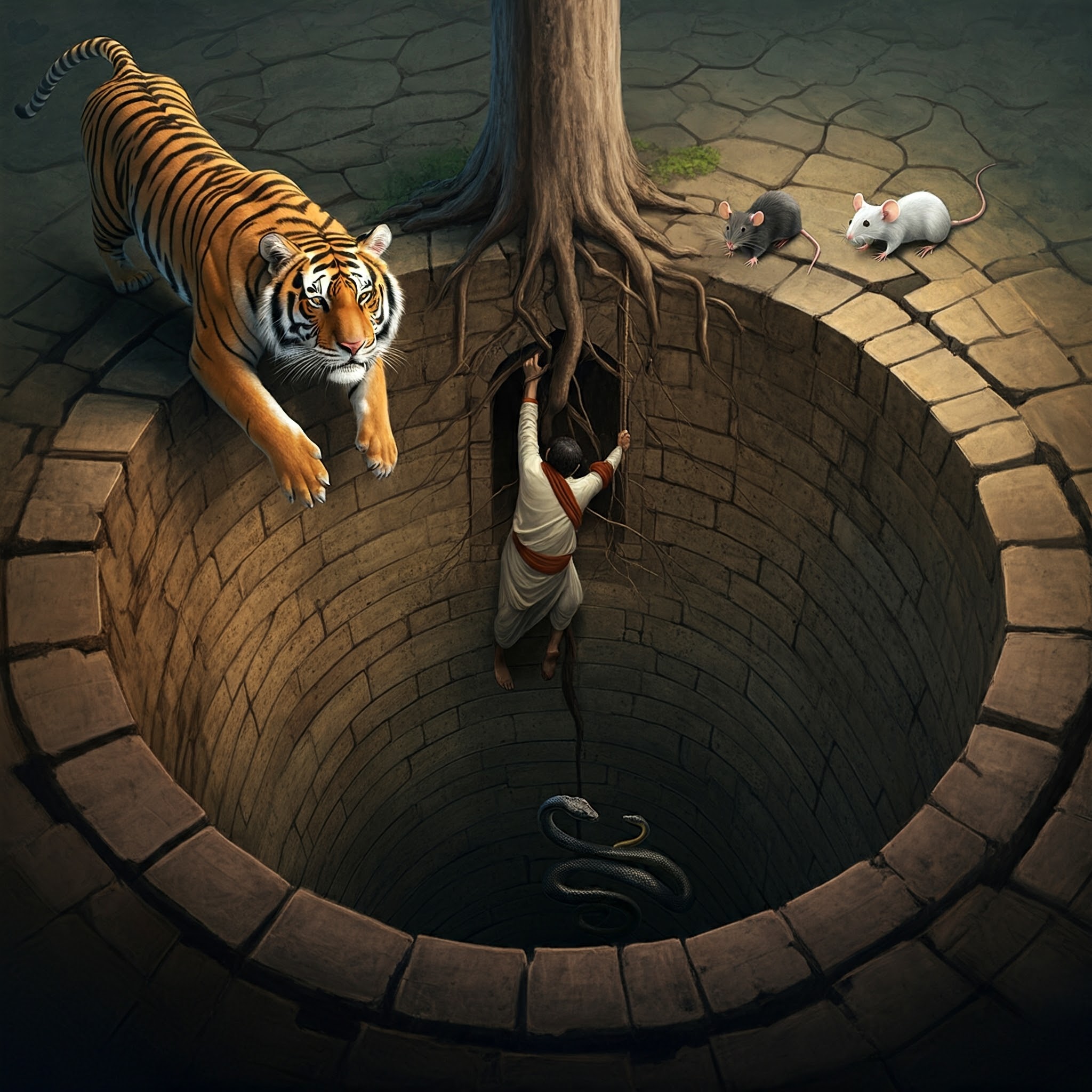
A False High
Artist: AI Generated for this edition at least.
Source; License: Source: Gemini. Copyright: André Cesta.
Chapter: Chapter 12: An Abstract and Symbolic Look at Transcendence and the Subtle Energy Body.
Description: A depiction of Ajahn Brahm' story.
Book Excerpt
Ajahn Brahm on his book: “Who Ordered This Truckload of Dung?” tells the story of a false “high” in remarkable symbolic details. It has some similarities with the story of the hunter, the lioness and the deer. The story again ends in a stalemate exactly as quoted in Italics below or as depicted below. But your life need not be in a stalemate; for he who searches an escape will find it!